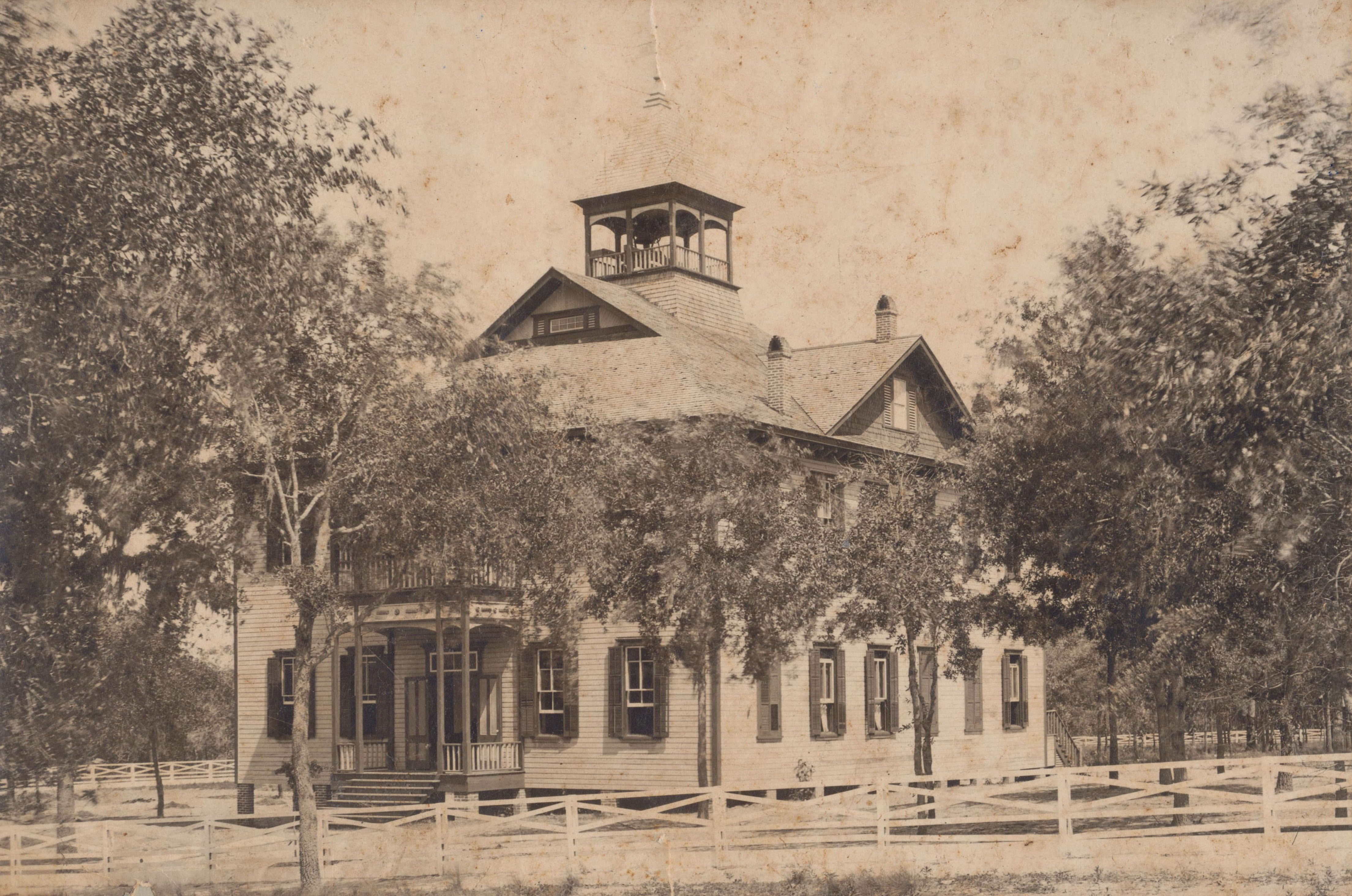
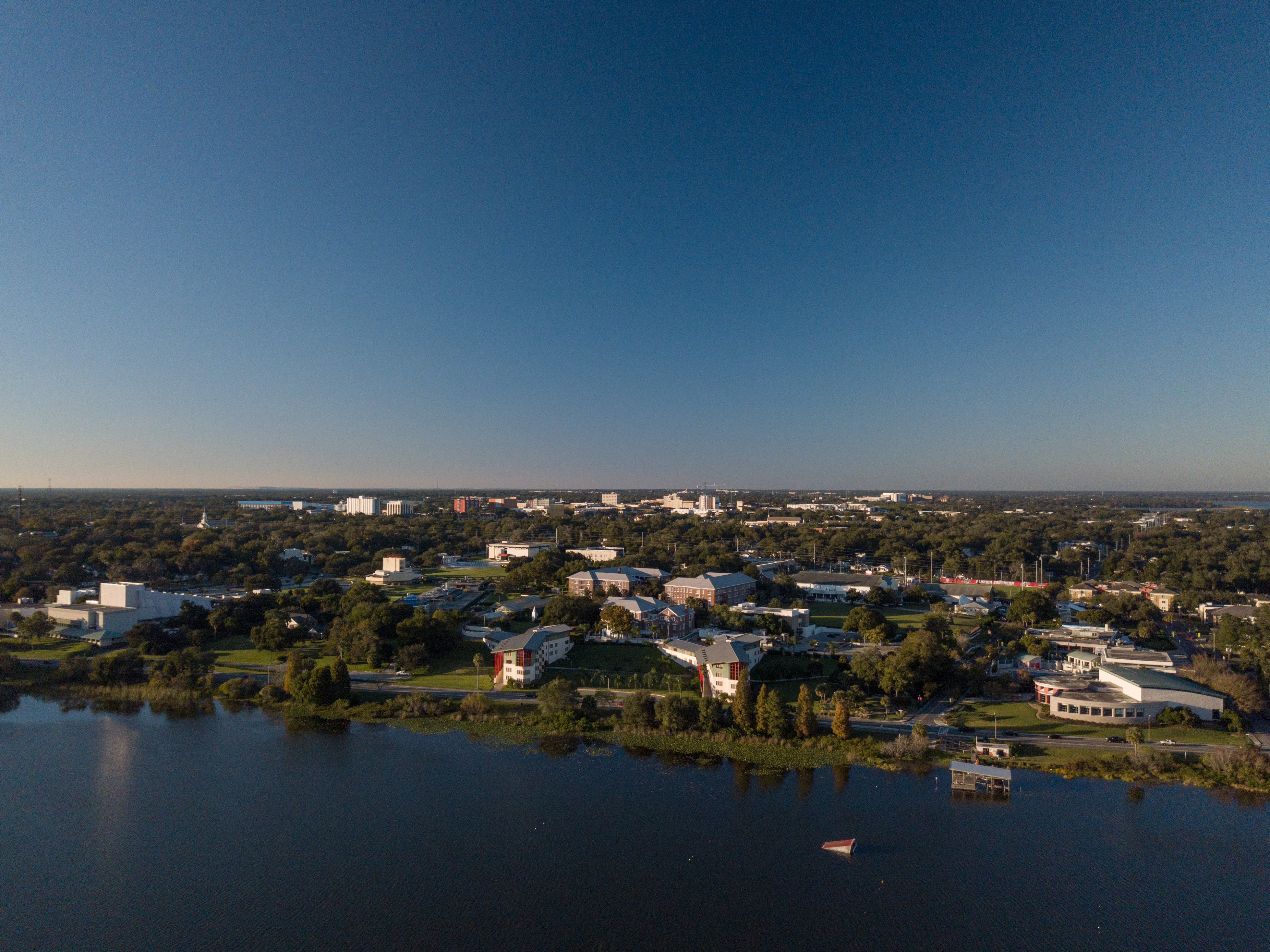
In Lakeland, the campus started out with two buildings: a women’s dormitory and a social hall which contained classrooms, the library, labs, and a dining hall. In 1925, President
Alderman announced his retirement and Dr. Ludd M. Spivey was chosen as his successor. Dr. Spivey was responsible for much of what is on campus
today. He championed Southern College through rallying supporters and raising the
funding needed to keep the College going. Dr. Spivey was also responsible for bringing
Southern College to the attention of Frank Lloyd Wright in the 1930s. Wright came to the campus in 1936 to inspect the grounds, and from
there, he agreed to the construction of buildings on the campus. Since then, the campus
has continued to grow and flourish.
The national, and even international, historical significance of these Frank Lloyd
Wright buildings, as well as the Lakeland campus as a whole, has been recognized by
multiple organizations throughout the years. On June 11, 1975, Florida Southern College
was listed in the National Register of Historic Places. A dedication ceremony was held on February 16, 1977 to receive the honor and the
accompanying plaque. Today, the plaque can be found outside the Watson-Fine Administration buildings.
In 2008, the Frank Lloyd Wright buildings on campus were added onto the World Monument Fund’s World Monuments Watch list because the buildings had begun to suffer from deterioration issues, such as
water infiltration. By being added to this list, Florida Southern College was able
to obtain both the funding and resources required to help better preserve these buildings
for future generations. One of the main undertakings was a textile block restoration
project in Annie Pfeiffer Chapel as these blocks had been the most susceptible to water infiltration. The project included a block-by-block analysis as well as laboratory testing to determine the
best repair and preservation methods.
Due in part to these restoration efforts, on March 2, 2012, the Child of the Sun collection
of Frank Lloyd Wright buildings was designated as a National Historic Landmark District by the National Park Service because the campus is the largest single-site collection
of Frank Lloyd Wright architecture in the world.
Most recently, on March 31, 2017, the campus was also designated as a United Methodist
Historic Site with the commemorative plaque located outside of Annie Pfeiffer Chapel.