
Cadet Life
A Day in the Life
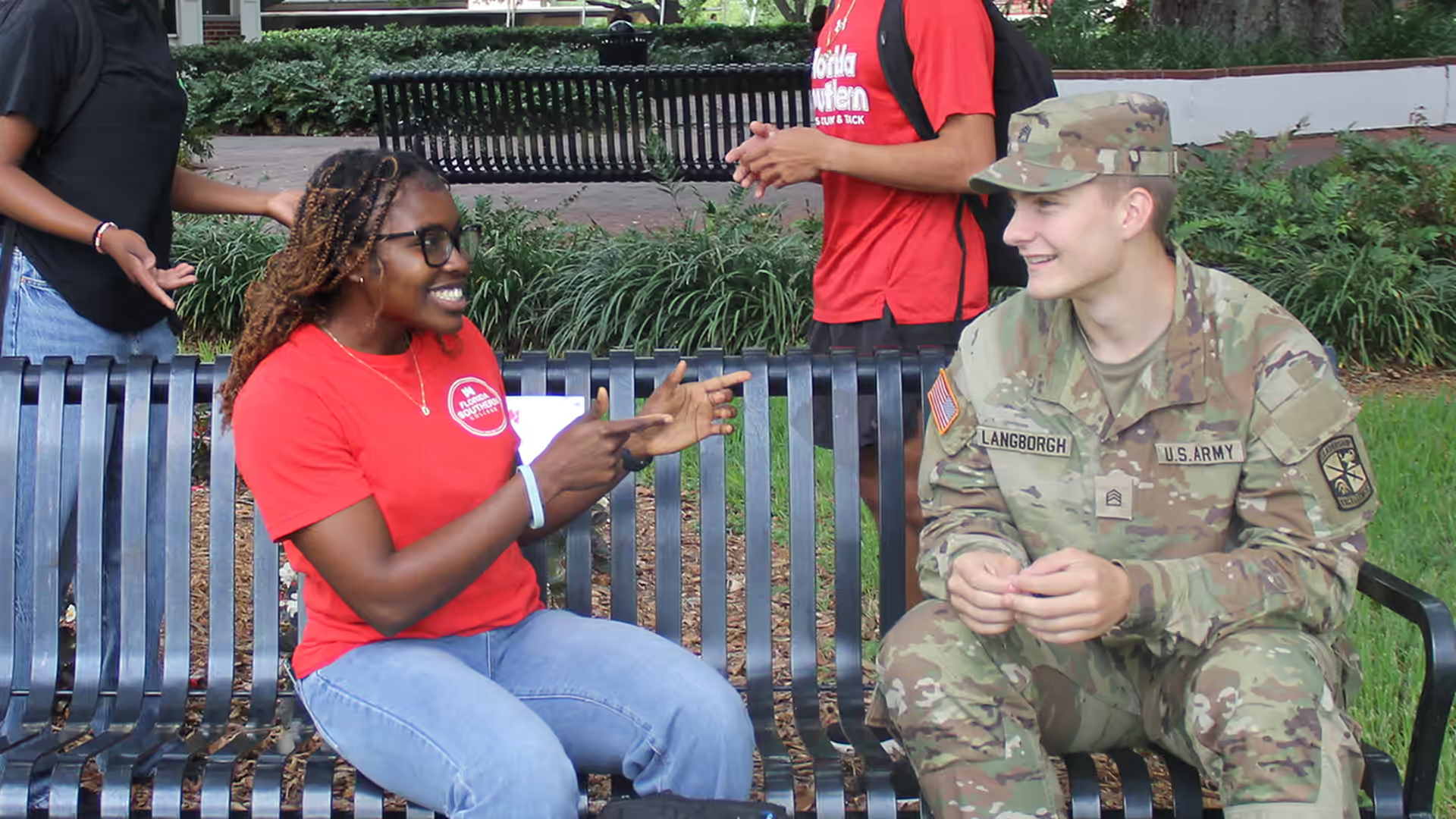
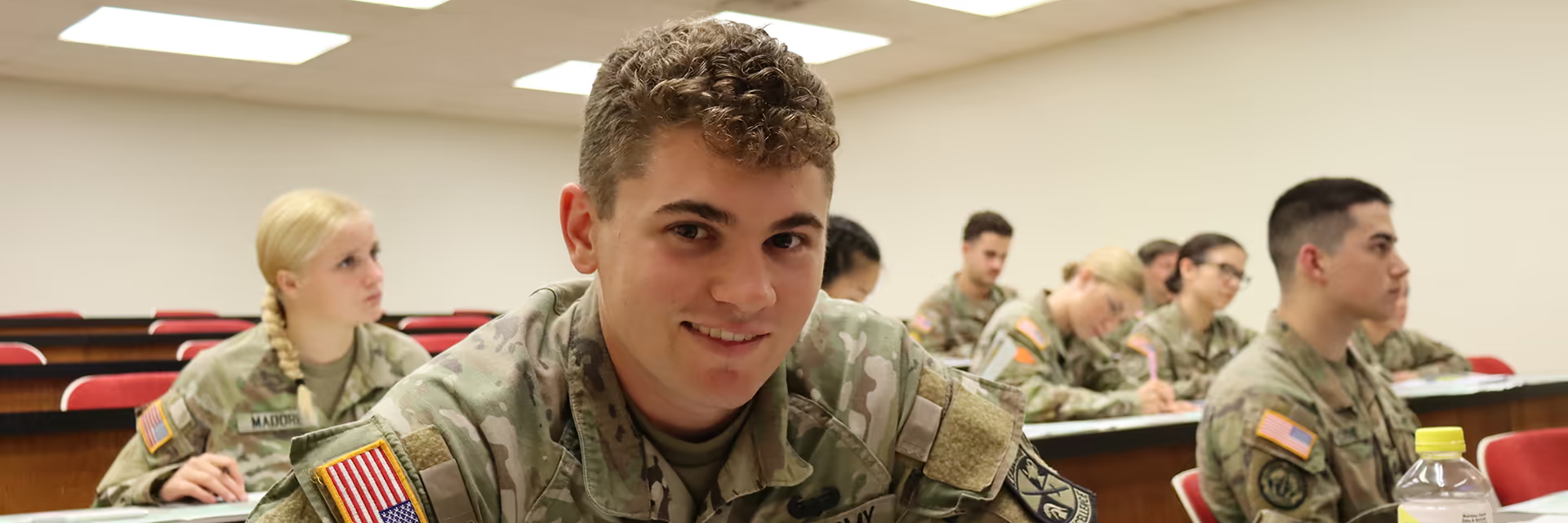
A cadet's day blends academics, physical training, and leadership development with the rest of campus life. Most mornings start with physical training from 6:00 to 7:00 a.m. as part of the curriculum, alongside cadets from Florida Southern, Southeastern University, and Polk State College. From there, your day looks like any other student's, with classes for your major and your Military Science minor, leadership labs that put what you study into the field, and time with the campus community you came to college for.
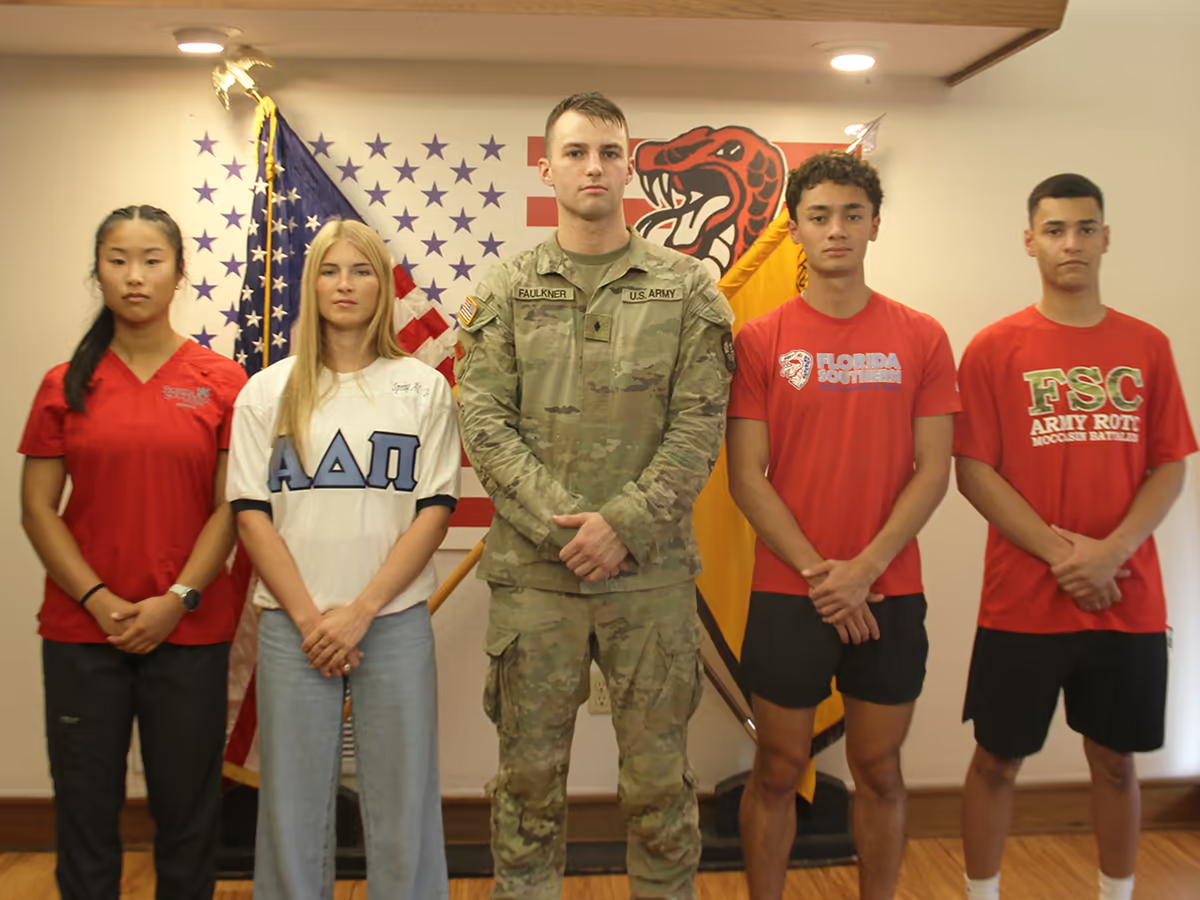
ROTC doesn't replace your college experience. It adds to it. Our cadets compete in NCAA athletics, join clubs, take part in fraternities and sororities, study abroad, and live the rest of campus life right alongside their classmates. The Moccasin Battalion is a full community within a full college experience.
Hear It from Our Cadets
The best way to understand cadet life is to hear it from the cadets living it. From language immersions in Jordan and East Africa to summer internships with the Army's Test and Evaluation Command and Army Medical Department, here's what they have to say.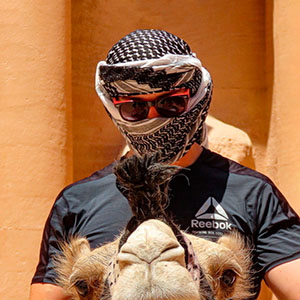
“I loved Project GO! It was one of the best decisions I've ever made within ROTC. I was able to learn a whole new language and culture for 10 weeks. I went to the Dead Sea, the Jordan River, Wadi Rum (where they filmed Star Wars), and more. I also became scuba certified, and I made lifelong friends who are in other ROTC programs. It was a once-in-a-lifetime experience that wasn't just all paid for, it actually earned me money. My family was able to visit, which was a nice touch from home, and I wasn't even too homesick because of all the fun I was having.”
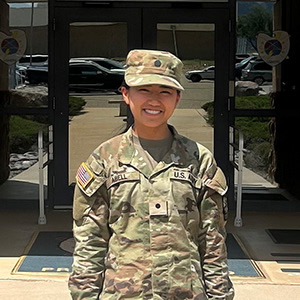
"At my internship, I had the opportunity to work with the Electronic Proving Ground, part of the Army Test and Evaluation Command at Fort Huachuca in Arizona. I learned all about the different developmental tests and the facilities behind them, including the Environmental Test Facility, the Antenna Test Facility, and the Global Positioning System Test Facility. I was there for 28 days and even helped with some of the tests, and I attended a couple of Military Intelligence BOLC classes. It was an amazing experience that I'm lucky to have had. I learned a lot about the Army, the different sides of it, and what job I could have with my major. Overall, the internship was beneficial, and I would sign up for it again!"
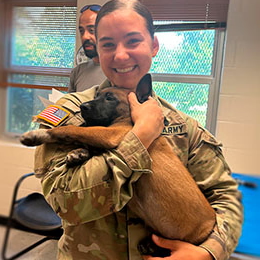
"At my AMEDD internship, I was fortunate to work with a 64A, an Army Veterinarian. I shadowed for 28 days following my Cadet Summer Training. This internship gave me so many chances to see what my career would be like as an Army Veterinarian: seeing patients that were federal or military working dogs, as well as civilian dogs belonging to active service members and veterans. I went on a food audit to see how they inspect caterers that serve military events, and I toured the Old Guard stables at Fort Myer in Washington, D.C. Overall, this internship was a real eye-opener as to what a month as a 64A would look like, and I'm grateful I was chosen to participate."
Study Languages and Cultures Abroad with Project GO
Project Global Officer (Project GO) is a Department of Defense initiative that builds the language skills, regional expertise, and intercultural communication of future military officers. Sponsored by the Defense Language and National Security Education Office and administered by the Institute of International Education, Project GO funds domestic and overseas language programs and scholarships for ROTC cadets nationwide. Since 2007, Project GO institutions have provided more than 5,600 summer scholarships for critical language study.
Moccasin Battalion cadets have used Project GO to study languages from Swahili to Arabic, on programs lasting up to 10 weeks. The scholarships are fully funded, and cadets have studied in Jordan, Tanzania, Kenya, and other locations around the world.
Intern with Army Commands, Federal Agencies, and More
Beyond the classroom and the field, Moccasin Battalion cadets pursue specialized internships in technical fields, research, and government service. Each year, the Department of Defense, universities, and a range of government and civilian agencies offer internships to more than 400 Army ROTC cadets nationally.
Available internships include U.S. Army Cyber (ARCYBER), the MIT Lincoln Laboratory (MITLL), the National Security Agency (NSA), the Nuclear Science and Engineering Research Center (NSERC), the JAG Corps, and the Army Medical Department (AMEDD), along with opportunities at West Point and the FBI. Below are several of the structured programs cadets can apply to.
A clinical elective in a military treatment facility for cadets pursuing a nursing degree.
The Nurse Summer Training Program is a specialized clinical elective within the Army ROTC nursing track, for cadets pursuing a nursing degree. Usually completed between junior and senior year, NSTP gives cadets real-world experience that most nurses don't get until after graduation. Cadets complete 120 or more clinical hours under the mentorship of an experienced Army nurse at a military treatment facility, building hands-on clinical skills while still in school.
After completing NSTP and graduating, cadets commission as Second Lieutenants. Once they pass the NCLEX-RN exam, they attend the Basic Officer Leadership Course (BOLC) at Fort Sam Houston, Texas, before reporting to their first assignment at an Army medical center.
A summer immersion for cadets considering a career as Army Chaplains.
The Chaplaincy Internship Program is a summer internship for cadets considering a
career as Army Chaplains. It's an immersive experience, letting cadets observe and
take part in the daily responsibilities of military chaplains and explore whether
the chaplaincy is the right path for them.
- Who it's for: Primarily MSIII (junior) cadets interested in an academic delay to attend seminary and become Army Chaplains. MSIV (senior) cadets graduating in December or later may apply as an exception to policy.
- Duration and locations: Typically three weeks during the summer, at Army installations within the continental U.S. (CONUS) or overseas (OCONUS).
- What cadets gain: Interns observe chaplains in action, taking part in memorial services, counseling sessions, and advising commanders, building a real understanding of the chaplain's multifaceted role.
Hands-on military public affairs and communications experience.
Offered by U.S. Army Cadet Command, the Public Affairs Officer Internship Program gives cadets, especially those majoring in communications, journalism, or related fields, hands-on experience in military public affairs.
Cadets write and edit articles, coordinate media events, respond to media inquiries, support multimedia production, and cover Army events. The program typically lasts about 12 weeks at Fort Knox, Kentucky, with possible assignments at other installations such as Joint Base Lewis-McChord, Washington, and Fort Monroe, Virginia. It's a strong foundation for a future career in communications and media relations.
Forensic science training in Largo, Florida.
The Forensic Internship Program is built for cadets interested in forensic science, criminal justice, or related fields. Based in Largo, Florida, at the National Forensic Science Technology Center (NFSTC), cadets learn to examine fingerprints, tire tracks, and footwear impressions, and are introduced to explosives detection, chemical analysis, media exploitation, IED investigation, and deployable forensic laboratory capabilities.
Hands-on healthcare leadership experience at Army medical facilities nationwide.
The Army Medical Department Internship Program gives cadets practical experience in military medical and healthcare settings, developing future healthcare leaders and building awareness of Army Medical Department careers. Typically a summer program lasting 4 to 8 weeks, cadets are assigned to Army medical centers and hospitals across the U.S., such as Walter Reed and Brooke Army Medical Center.
- Hands-on experience: Interns observe and take part in administrative, clinical, or research activities within Army medical facilities.
- Professional development: Exposure to military healthcare operations, ethics, leadership, and medical logistics.
- Mentorship: Guidance from military medical professionals, including doctors, nurses, administrators, and researchers.
- Rotational assignments: Interns may rotate through departments such as emergency medicine, surgery, logistics, or administration.
Real-world engineering work with the U.S. Army Corps of Engineers.
Sponsored by the U.S. Army Corps of Engineers (USACE), the Engineer Internship Program gives engineering students practical, real-world experience and prepares them for professional careers through exposure to engineering projects, tools, and workplaces. Cadets may take on functions such as design, project management, project engineering, construction representation (quality assurance), and GIS. Most slots focus on civil, mechanical, and environmental engineering, but all engineering majors are encouraged to apply.
Compete for the Mocs and Train with the Battalion
You don't have to choose between competing for the Mocs and training with the Moccasin Battalion. Florida Southern is one of NCAA Division II's most decorated athletic programs, competing in the Sunshine State Conference. ROTC leadership works with cadet-athletes to coordinate ROTC training around practice and competition schedules. Communication is key, and it starts before you arrive on campus.
A few things to know:
- Many cadets balance both successfully. It takes time management and open communication, but it's a path the program supports.
- NCAA eligibility is not affected. Army ROTC participation does not impact your standing with the NCAA. Cadet-athletes stay in contact with FSC's athletic department compliance officers as needed.
- Scholarship stacking has limits. Cadets on full or partial athletic scholarships are not eligible to also receive an Army ROTC scholarship, since the two benefits do not stack. However, holding an athletic scholarship does not prevent you from participating in Army ROTC.
Train at the Army's Most Respected Schools
Some of the most defining moments of your time as a cadet happen outside of FSC. Once you've contracted with the program and are performing well, you become eligible for elite Army schools: Airborne, Air Assault, Mountain Warfare, Sapper Leader Course, Jungle Operations, Combat Diver, and more. Cadets earn badges, donn tabs, and test themselves against the toughest training the Army offers.
Questions? Let's Talk.
Whether you have a question about enrollment, scholarships, or daily life in the battalion, our team is here to help.
Ready to Experience Cadet Life?
The best way to find out if cadet life is right for you is to talk to someone who's lived it. Reach out and we'll connect you with a recruiter who can walk you through the next steps.